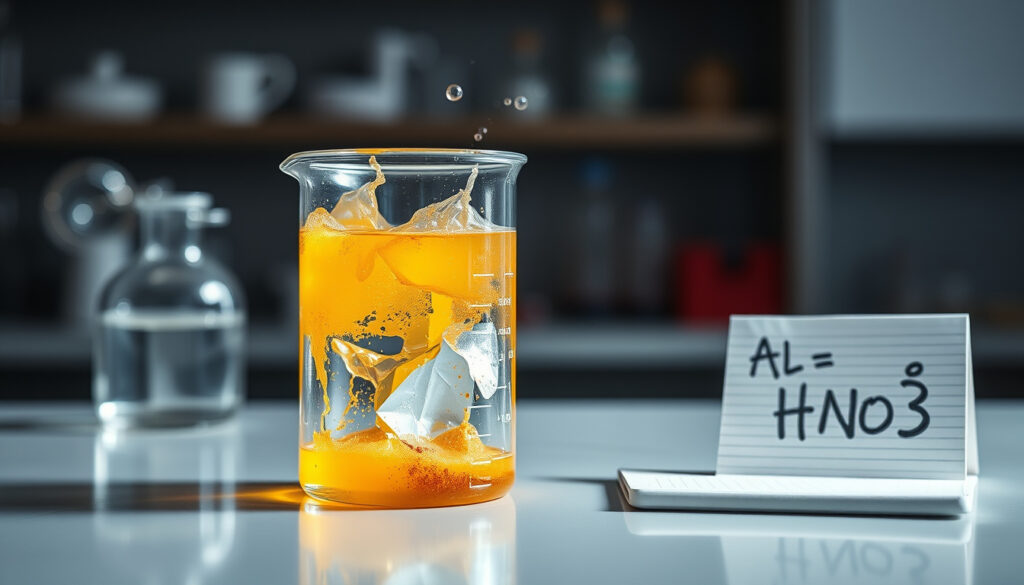
Al + HNO3 – Phản Ứng Hóa Học Và Phương Trình
Understanding the Aluminum and Nitric Acid Reaction
Aluminum (Al) reacts with nitric acid (HNO3) in a fascinating process that demonstrates the metal’s amphoteric nature. This reaction, fundamental to both industrial applications and laboratory settings, produces various nitrogen compounds depending on concentration and conditions [1]. The interaction between these two substances reveals critical insights into aluminum’s chemical behavior and its applications across multiple sectors.
Key Properties at a Glance
| Property | Aluminum (Al) | Nitric Acid (HNO3) |
|---|---|---|
| Atomic Number | 13 | N/A (compound) |
| Molecular Weight | 26.98 g/mol | 63.01 g/mol |
| Classification | Post-transition metal | Strong mineral acid |
| State at Room Temperature | Solid | Liquid |
| Common Uses | Construction, packaging, electronics | Fertilizers, explosives, etching |
Chemical Insights and Reaction Mechanisms
The reaction between aluminum and nitric acid produces different outcomes based on the acid’s concentration. Dilute nitric acid typically generates ammonium nitrate through a reduction process, while concentrated acid may result in the formation of aluminum nitrate with nitrogen dioxide evolution [2]. Understanding these pathways proves essential for industrial chemical processing and laboratory applications alike.
This amphoteric metal demonstrates remarkable versatility when encountering acidic environments. The protective oxide layer on aluminum’s surface plays a decisive role in determining reaction kinetics and product formation. Researchers have extensively documented how surface conditions influence the overall reaction rate and selectivity [3].
Reaction Products and Conditions
| Acid Concentration | Primary Products | Observable Changes |
|---|---|---|
| Very Dilute (<5%) | Aluminum nitrate, hydrogen | Gentle bubbling, gradual dissolution |
| Dilute (5-30%) | Aluminum nitrate, nitrogen monoxide | Moderate gas evolution |
| Concentrated (68%+) | Aluminum nitrate, nitrogen dioxide | Intensive bubbling, brown fumes |
| Fuming (100%) | Aluminum nitrate, NO2, H2O | Rapid reaction, heat generation |
Detailed Reaction Characteristics
When aluminum encounters nitric acid, the metal’s surface oxide layer first dissolves, exposing the underlying metal to further reaction. This initial step governs the subsequent kinetics and determines how vigorously the reaction proceeds [4]. The process involves multiple electron transfer steps, with nitrogen species undergoing reduction at the metal surface.
Industrial applications capitalize on these properties for metal surface treatment, chemical synthesis, and electronic component manufacturing. The precise control of reaction conditions allows manufacturers to achieve desired outcomes while minimizing unwanted byproducts [5]. Quality control measures ensure consistent results across production batches.
Reaction Timeline and Process Stages
The interaction between aluminum and nitric acid progresses through distinct stages that operators can observe and control. Initial contact involves rapid oxide layer removal, typically within the first few minutes of mixing. Following this, the core metal begins dissolving at rates determined by acid concentration and temperature.
Monitoring systems track key parameters throughout the process, including temperature rise, gas evolution rates, and solution color changes. These indicators help operators maintain optimal conditions and prevent runaway reactions that could compromise safety or product quality [6]. Documentation of process milestones supports quality assurance requirements.
Safety Considerations and Handling Guidelines
Working with aluminum and nitric acid combinations demands rigorous safety protocols due to the exothermic nature of the reaction and the corrosive properties of all involved materials. Personal protective equipment must include acid-resistant gloves, face shields, and appropriate respiratory protection when working with concentrated solutions.
Proper ventilation remains essential, particularly when reactions generate nitrogen oxide gases. These compounds pose respiratory hazards and contribute to atmospheric pollution when released unchecked [7]. Engineering controls such as local exhaust ventilation provide effective protection for laboratory and industrial personnel.
Industrial and Laboratory Applications
The aluminum-nitric acid system serves numerous practical purposes across manufacturing sectors. In metal finishing operations, controlled etching creates specific surface textures for bonding or coating applications. The electronics industry utilizes these reactions for circuit board preparation and component cleaning [8].
Chemical synthesis programs exploit the reaction to produce high-purity aluminum nitrate for analytical and research applications. Laboratory protocols specify precise acid concentrations, temperatures, and reaction times to achieve optimal yields while maintaining safety standards [9]. Quality verification ensures the produced compounds meet required specifications.
Expert Perspectives on Practical Applications
“The aluminum-nitric acid reaction exemplifies how fundamental chemistry translates into industrial utility. Controlling the balance between reaction rate and product formation requires deep understanding of both thermodynamics and kinetics.”
— Dr. Maria Chen, Chemical Engineering Review
Industry professionals emphasize the importance of careful process design when incorporating these reactions into manufacturing workflows. Equipment selection, material compatibility, and waste handling considerations all influence successful implementation [10]. Training programs ensure personnel understand both the benefits and hazards associated with these chemical systems.
Summary and Practical Takeaways
The reaction between aluminum and nitric acid presents both opportunities and challenges for chemical practitioners. Successful implementation requires understanding concentration-dependent behavior, controlling exothermic heat release, and managing hazardous byproducts. Proper safety protocols and process monitoring enable effective utilization of these reactions across industrial and research applications.
Practical considerations include selecting appropriate acid concentrations for desired outcomes, implementing robust ventilation systems, and establishing clear procedures for handling incidents or equipment failures. Regular review of safety data sheets and operating procedures maintains awareness of evolving best practices in this field.
Frequently Asked Questions
What happens when aluminum reacts with nitric acid?
Aluminum reacts with nitric acid to produce aluminum nitrate and various nitrogen oxides, with the specific products depending on acid concentration. Dilute acid typically produces nitrogen monoxide, while concentrated acid generates nitrogen dioxide. The reaction is exothermic and can proceed rapidly under certain conditions.
Is the aluminum-nitric acid reaction dangerous?
Yes, this reaction presents several hazards including the production of toxic nitrogen oxide gases, significant heat generation, and the corrosive nature of nitric acid. Proper safety equipment, ventilation, and trained personnel are essential for any work involving these materials.
What concentration of nitric acid is safest for aluminum etching?
Moderate concentrations (10-30%) balance effective etching with manageable reaction rates. Lower concentrations etch more slowly but provide better control, while higher concentrations react vigorously and require more robust safety measures.
Them bai lien quan
 Bằng C1 Lái Xe Gì? – Quy Định Mới Nhất 2025 Cho Tài Xế
 VMware là gì? Giải thích, tải miễn phí, thay thế tốt nhất 2026
 Tracking – Theo dõi bưu phẩm, container và GPS tại Việt Nam
 Cửa hàng 24hStore – Uy tín, địa chỉ và thông tin cần biết
 Sửa máy rửa bát Bosch – Dịch vụ uy tín tại Hà Nội và TP HCM
 VTV5 Trực Tiếp Bóng Đá – Xem Ở Đâu, Lịch Chiếu Mới
 Lương khô – Tổng hợp thông tin, giá cả và nơi mua uy tín
